
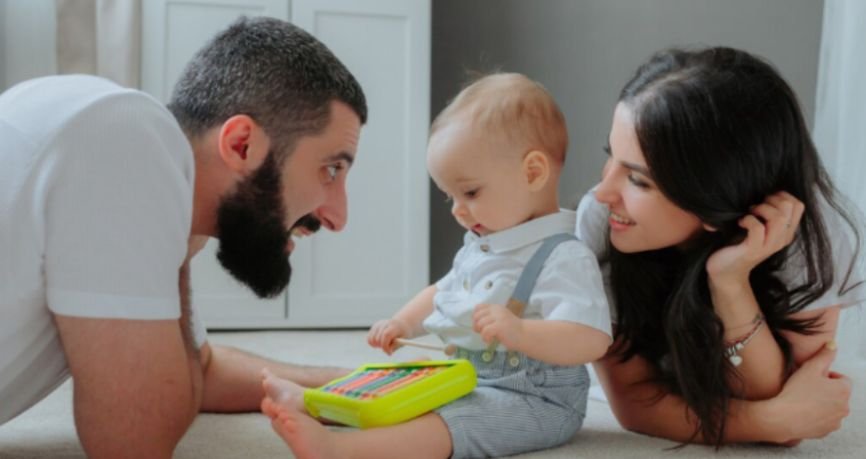
If you’re wondering when babies talk words, you’re not alone. Every parent eagerly waits for that magical first “mama” or “dada.” The short answer is that most babies say their first meaningful word between 12 and 18 months.
However, language development begins much earlier through cooing, babbling, gestures, and social interaction. Understanding the full journey of speech development helps you know what is normal and when to seek guidance.
In this guide, you will learn about first word timelines, developmental stages, signs of delay, and practical ways to encourage your baby’s speech naturally at home.
Key Takeaways
- Most babies say their first meaningful word between 12 and 18 months, though speech development begins much earlier with cooing and babbling.
- Language skills develop in stages, starting from sounds (0–6 months), to babbling (6–9 months), to first words (around 12 months), and short phrases by 18–24 months.
- Receptive language (understanding words) develops before expressive language (speaking words).
- By 18 months, many toddlers say 10–50 words, and by age 2, they often begin combining two words.
- Consistent growth in vocabulary matters more than hitting an exact milestone date.
- Face-to-face interaction, reading daily, and responsive conversation are the most effective ways to encourage early speech.
- Consult a pediatrician if your baby is not babbling by 12 months, has no words by 16 months, is not combining words by 24 months, or loses previously learned speech skills.
When Do Babies Talk Words for the First Time?
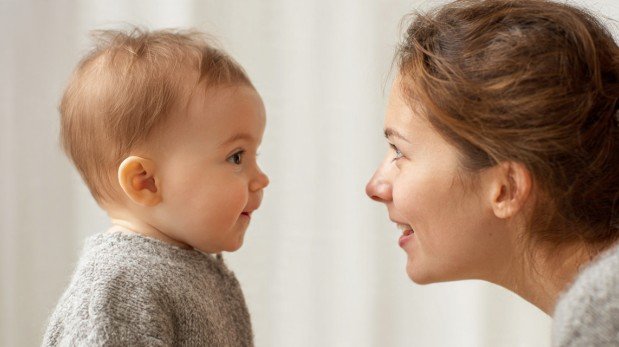
Most babies speak their first real word around their first birthday, although anywhere from 10 to 18 months falls within the typical range. Your baby’s first words are an exciting milestone, but they don’t happen overnight.
Before saying actual words, babies spend months preparing through listening, observing, and practicing sounds. Language growth happens gradually, and consistent progress over time matters more than hitting a specific date.
Speech Development Timeline by Age
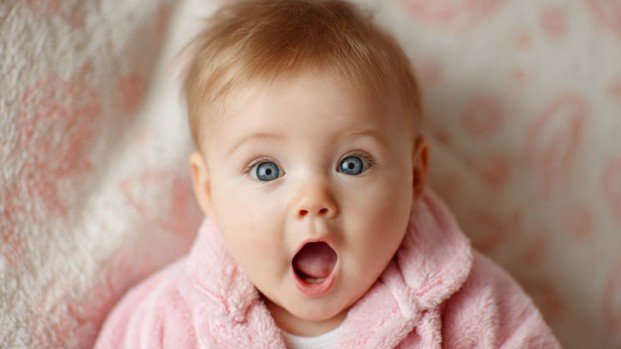
Speech development follows a predictable pattern, though each child progresses at their own pace.
Birth to 3 Months
During the first three months, babies communicate by crying, cooing, and making vowel-like sounds such as “oo” and “ah.” They respond to familiar voices and begin smiling socially.
Even though they are not forming words, they are building the foundation for communication through sound recognition and emotional bonding.
4 to 6 Months
Between four and six months, baby’s babble. You may hear combinations like “ba,” “ma,” or “da.” At this stage, the sounds do not usually carry meaning, but they are an essential step in speech development. Babies also start reacting more clearly to tone and facial expressions.
7 to 9 Months
Babies now experiment with repeating syllables such as “bababa” and “dada da.” They often respond to their name and use gestures like pointing or reaching to communicate needs.
Understanding simple words begins during this period, showing that receptive language is developing before spoken language.
10 to 12 Months
This is when many babies say their first intentional word. Common early words include “mama,” “dada,” “hi,” or “ball.”A word counts if it is used consistently, refers to something specific, and is spoken independently rather than just copied.
Even if pronunciation is unclear, consistent use with meaning qualifies as a real word.
12 to 18 Months
By 18 months, many babies say between 10 and 50 words. Vocabulary growth may seem slow at first, but steady progress is the key indicator of healthy growth and development. Some children speak earlier, while others observe quietly and begin talking more suddenly.
18 to 24 Months
This stage often brings a vocabulary surge known as the word explosion. Toddlers may reach 50 or more words and begin combining two words into simple phrases like “more milk” or “mommy go.” This marks a major leap in expressive language.
Age 3
By age three, most children speak in short sentences of three to four words and can be understood by unfamiliar listeners most of the time. They also begin asking simple questions and expressing ideas more clearly.
Factors That Influence When Babies Talk Words
Several elements affect speech development. Hearing ability plays a crucial role, as even mild hearing challenges can delay speech. Social interaction is equally important because babies learn language through face-to-face communication, not passive listening.
Developmental conditions such as autism spectrum disorder or other neurological differences may also influence speech timelines. Additionally, environmental exposure to language greatly impacts how quickly vocabulary grows.
Are Bilingual Babies Delayed?
Growing up in a bilingual home does not cause speech delay. Children exposed to two languages may divide their vocabulary between them, but their total word count across both languages reflects their development.
Research shows bilingual children follow the same general developmental patterns as monolingual children.
When Should Parents Be Concerned?
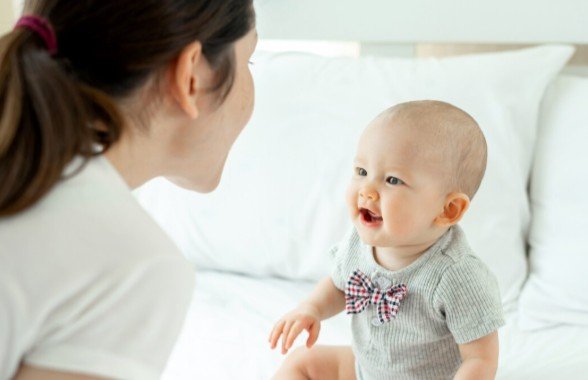
While variation is normal, certain signs warrant professional guidance. Parents should consult a pediatrician if a baby is not babbling by 9 to 12 months, has not spoken a word by 15 to 16 months, is not combining two words by 24 months, or loses previously learned speech skills.
Early evaluation and intervention significantly improve outcomes when delays are identified.
How to Encourage Your Baby to Talk
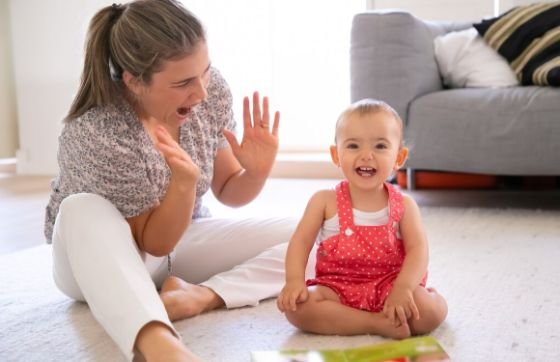
Parents play the most powerful role in speech and language development. Talking to your baby throughout the day builds vocabulary naturally. Narrate daily routines, describe objects, and respond enthusiastically to any sounds your baby makes.
Reading picture books daily strengthens word recognition and listening skills. Singing songs, using gestures, and playing interactive games further reinforce communication.
Expanding on your child’s words, such as turning “dog” into “big dog running,” helps them learn sentence structure.
Common Myths About When Do Babies Talk Words
There are several misconceptions about early speech. Some believe boys always talk later than girls, but individual variation matters more than gender trends. Others think screen time teaches language effectively, yet direct human interaction is far more beneficial.
Another myth is that all late talkers naturally catch up, but while many do, some require speech therapy to thrive. Monitoring progress is essential.
Frequently Asked Questions
1. When do babies speak words clearly?
Most babies say their first clear word between 12 and 18 months, although pronunciation may not be perfect initially.
2. Is it normal if my 14-month-old is not talking yet?
Yes, especially if they are babbling, understanding words, and communicating through gestures. However, seek advice if no progress is visible by 16 months.
3. How many words should an 18-month-old say?
An 18-month-old may say anywhere from 10 to 50 words, with steady growth being more important than exact numbers.
4. What causes speech delay in toddlers?
Speech delays can result from hearing issues, developmental conditions, limited interaction, or neurological factors.
5. Can too much screen time delay speech?
Excessive passive screen exposure can reduce interactive language experiences, which may affect speech development.
Supporting Healthy Speech Growth From the Very First Words
If you are asking when babies talk words, remember that most children say their first word around 12 months, but development occurs along a range. What truly matters is steady progress, meaningful interaction, and early attention to any concerns.
By talking, reading, and engaging with your baby daily, you create the strongest possible foundation for speech and language growth.