Welcoming a premature baby home is one of the most emotional and transformative experiences a parent can have. After weeks or months in the NICU, you’re finally preparing your little fighter for restful nights at home — but creating a safe sleep environment is especially vital for preemies due to their unique vulnerabilities and increased risk factors like low birth weight and immature nervous systems.
In this blog, we’ll walk you through everything you need to know — from positioning and bedding to room setup, routines, and everyday safety tips — so your baby sleeps safer, your anxiety eases, and your family sleeps more soundly.
Why Safe Sleep Matters for Premature Babies
Premature infants (born before 37 weeks gestation) often have lower muscle tone, immature breathing regulation, and less stable body temperature — all factors that make a structured, risk‑reducing sleep environment essential. Safe sleep practices are proven to lower the risk of Sudden Unexpected Infant Death (SUID), including Sudden Infant Death Syndrome (SIDS), and reduce suffocation and entrapment hazards.
1. Follow the ABCs of Safe Sleep
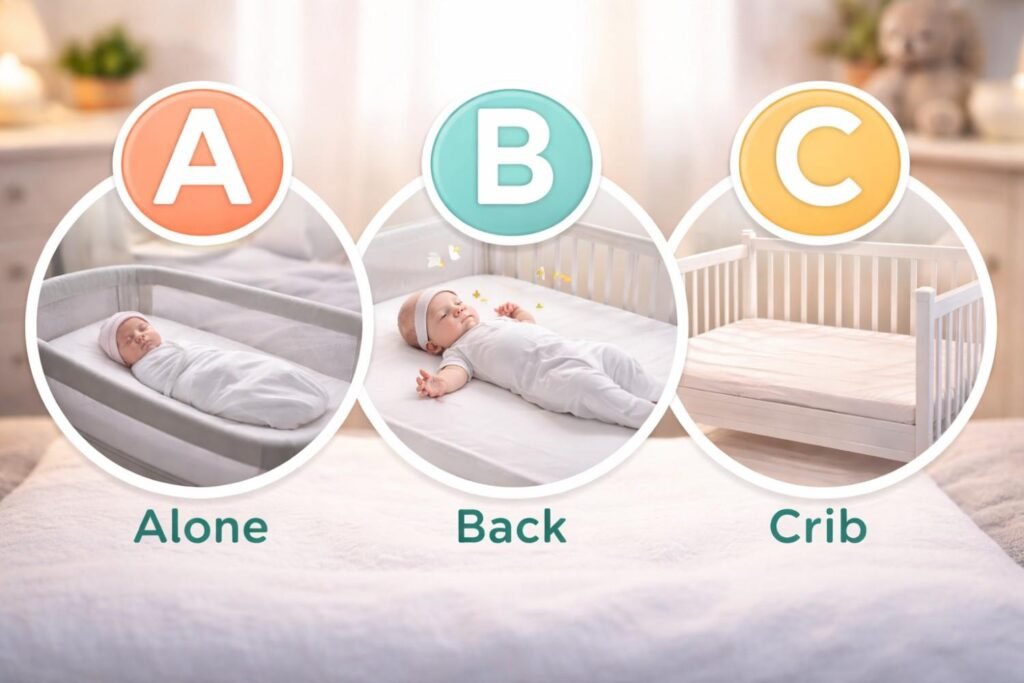
Experts universally recommend applying the ABCs of sleep safety — and this is especially important for preemies:
A — Alone
Your baby should sleep alone in their own sleep space — not with adults, siblings, or pets. Bed‑sharing and co‑sleeping significantly increase the risk of suffocation, especially in infants with lower birth weight.
B — Back
Always place your premature baby on their back for every sleep — daytime naps and nighttime alike. The back‑sleeping position helps keep the airway open and cuts risk of SIDS.
C — Crib (or Bassinet)
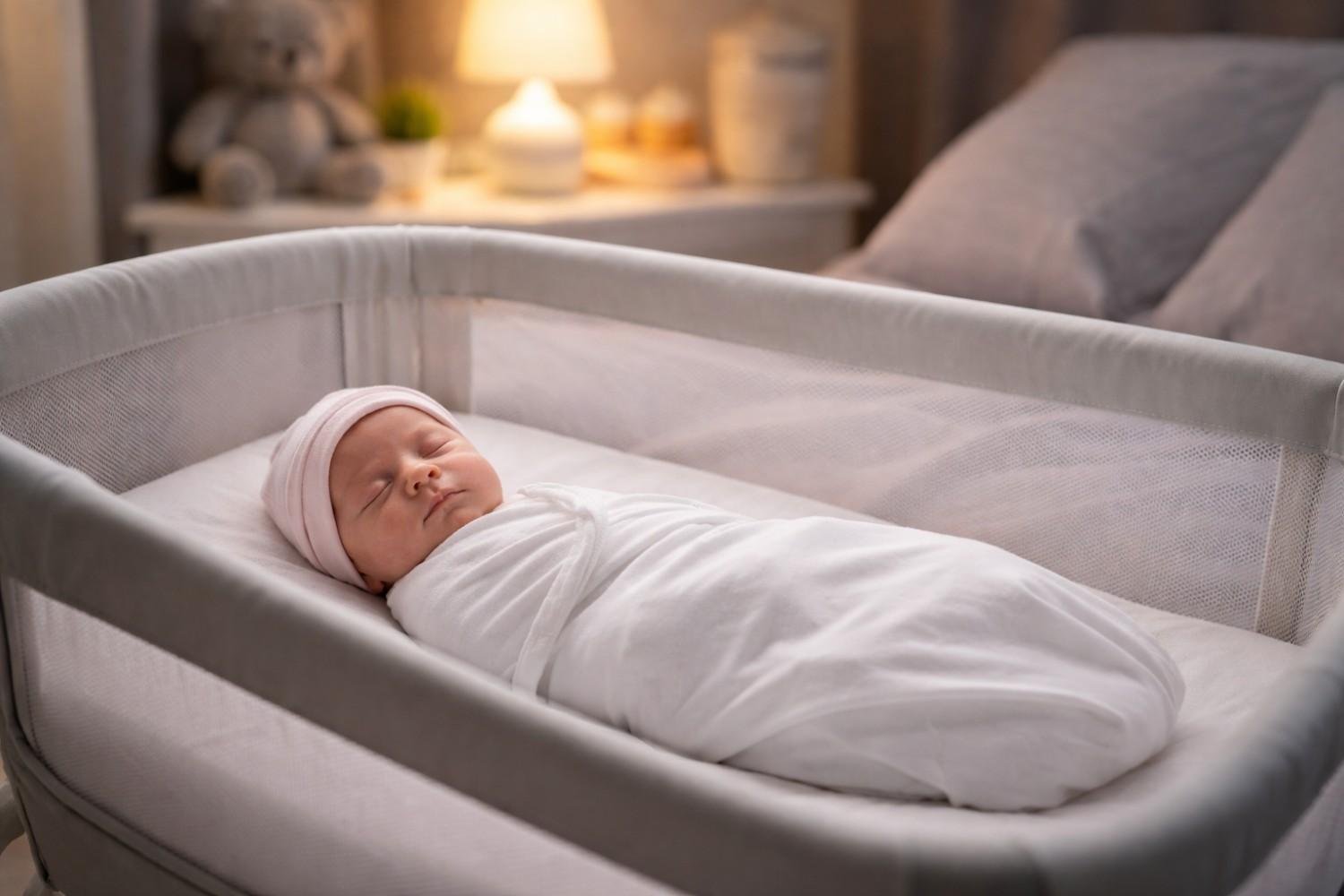
Use a firm, flat sleep surface like a safety‑approved crib, bassinet, or bedside sleeper with a tightly fitted sheet. Avoid inclined sleepers, car seats, swings, and sofas — these are not designed for regular sleep and can obstruct breathing.
2. Choose the Right Sleep Space
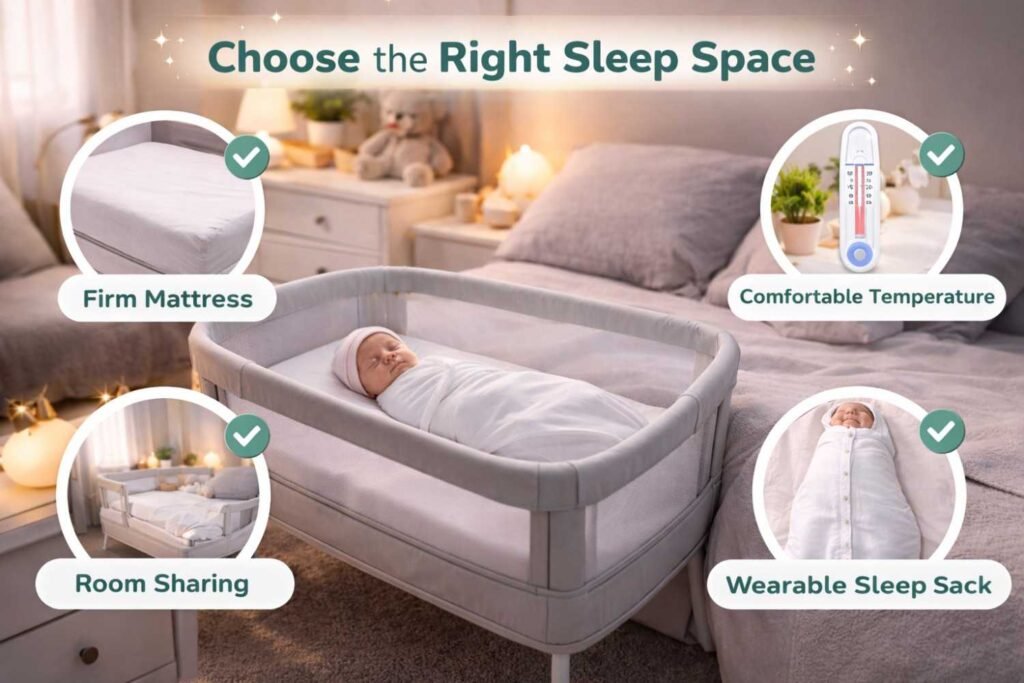
When setting up your baby’s sleep area, keep these foundational recommendations in mind:
✔ Firm Mattress & Fitted Sheet
A firm, flat mattress that doesn’t sag or conform to your baby’s face is non‑negotiable. Loose bedding and soft surfaces — including quilts, pillows, sheepskins, and bumpers — are major suffocation risks and should never be used.
✔ Room Sharing, Not Bed Sharing
Place the crib or bassinet in your bedroom for the first 6 months. Room sharing helps you monitor your baby and respond quickly during wakings — but avoid sharing the same sleep surface.
✔ Proper Ventilation & Temperature
Keep the room comfortably cool (ideal range about 68–72°F or 20–22°C) and avoid overheating. Dress your preemie in light layers like a sleep sack rather than heavy blankets — overheating has been linked with increased SIDS risk.
✔ Avoid Sleep Positioners & Props
While it may be tempting to use nests, wedges, or “support pillows” to keep your baby in place, these products can cause airway obstruction and are not recommended unless you’ve received specific instruction from your baby’s medical team.
3. Establish Sleep Safety Habits
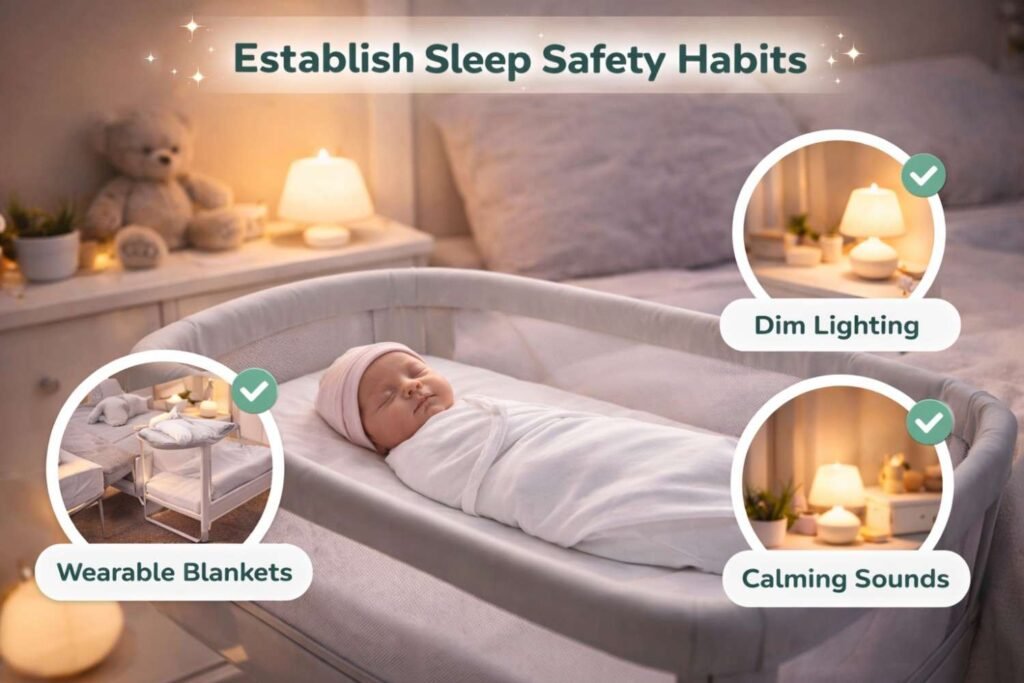
A consistent, calming sleep routine supports better sleep and reinforces a protective environment.
Routine Matters
Just like adults, babies benefit from predictable cues: gentle swaddling (if appropriate), dim lighting, soft sounds, and a lullaby can signal it’s time to sleep.
Comfort Without Compromise
Consider a white noise machine set below 50 decibels to mask household noise and help your baby transition to deeper sleep — but keep it at least a foot away from the sleep area and avoid overuse. (Always check with your pediatrician first.)
Wearable Blankets Over Loose Covers
Use sleep sacks or wearable blankets instead of loose blankets. These keep your baby warm without creating suffocation hazards.
4. Monitor Without Interfering
Parents frequently wonder whether using a baby monitor helps. Modern monitors with audio and movement sensors can offer peace of mind — but they are not substitutes for following safe sleep practices. Ensure cords are kept far from the crib and that any monitor is out of reach.
5. Smoke‑Free & Clean Air Zone
Exposure to tobacco smoke — even secondhand — significantly increases a premature infant’s risk of respiratory problems and SUID. Maintain a smoke‑free environment at all times.
6. Handling Special Medical Needs
Some preemies may have specific health requirements — such as supplemental oxygen or reflux management. Always:
- Follow your neonatologist’s instructions for home care.
- Confirm sleeping position recommendations after discharge — while hospital positioning may temporarily differ, once stable many preemies should sleep on their backs at home.
What NOT to Do: Common Pitfalls
Parents of preemies are understandably cautious — but certain practices can be dangerous:
No Bed‑Sharing with Adults or Siblings — even brief dozing can suffocate a baby.
No Pillows or Plush Toys in the Crib — they can cover your baby’s airway.
No Inclined Sleepers for Routine Sleep — significant suffocation risk.
No Loose Blankets or Bumpers — use sleep sacks instead.
Frequently Asked Questions (FAQs)
1. When can my preemie sleep in a blanket instead of a sleep sack?
As a general rule, avoid loose blankets until after your baby’s first year — but for premature babies, discuss this with your pediatrician because their temperature regulation evolves gradually.
2. Is pacifier use safe for sleep?
Offering a pacifier at bedtime and nap times can reduce SIDS risk — just ensure it’s clean and not attached to cords or clips.
3. Should I use a humidifier?
Humidifiers can ease dry‑air irritations but must be placed safely and kept clean to avoid mold. Ask your doctor first, especially if your baby has respiratory issues.
4. Is swaddling safe for my preemie?
It can be, if done correctly and only while your baby cannot roll over. Stop swaddling as soon as rolling begins.
Conclusion
Creating a safe sleep environment for a premature baby is one of the most important acts of love you’ll ever perform as a parent. With the right setup, routines rooted in expert recommendations, and a focus on safety without fear, you can help your little one rest well and grow strong.
Remember: sleeping alone, on the back, on a firm surface — in the same room as you — remains the cornerstone of safe sleep.