
Becoming a parent brings a whirlwind of joy and excitement, but it also introduces a lot of uncertainty—especially when it comes to feeding your newborn. I’ll never forget the overwhelming moment I stared at my baby, wondering, How much to feed a newborn baby? It was the question that consumed my thoughts as I tried to follow the well-meaning advice of family and friends.
But let’s face it, every baby is different! So, let’s dive into the basics of feeding your newborn, clear up any confusion, and help you confidently navigate the first few weeks.
How Much Should a Newborn Baby Eat in the First Few Days?
During the first few days of life, your newborn’s stomach is about the size of a cherry, and they only need tiny amounts of milk or food. Here’s a breakdown of what you can expect:
- Day 1: Your newborn will typically consume about 1 teaspoon (5 mL) of breast milk per feeding. If you’re formula feeding, it will be around 0.5 – 1 ounce.
- Day 2-3: As your baby’s stomach expands, they’ll need about 0.5 – 1 ounce (15–30 mL) of breast milk per feed, and 1 – 2 ounces of formula.
The frequency of feedings will be every 1–3 hours. Newborns’ small stomachs need to be filled often, so don’t be surprised if they want to eat more frequently than expected. Remember, these are guidelines, and actual needs can vary depending on your baby’s weight, appetite, and whether they’re breastfeeding or formula feeding.
How Much to Feed a Newborn Baby After the First Week?
After the first week, you’ll begin to notice some changes in your baby’s feeding habits. Their stomach is now the size of a walnut, and they can handle more milk at each feeding.

- 1 Week: Your newborn will likely consume 1.5 – 2 ounces (45–60 mL) of breast milk per feed. If formula feeding, this increases to 2 – 3 ounces.
- 2–4 Weeks: The amount increases again to about 2 – 4 ounces of breast milk per feeding. Formula-fed babies may drink 3 – 4 ounces. The frequency of feedings is generally around every 3–4 hours.
Even as the amount per feeding increases, keep in mind that newborns may still eat 8–12 times per day. Every baby is unique, and their needs will evolve rapidly as they grow.
How to Know if Your Newborn Is Eating Enough?
As a new parent, it’s easy to worry whether your baby is getting enough food. Thankfully, there are a few key signs you can look for:
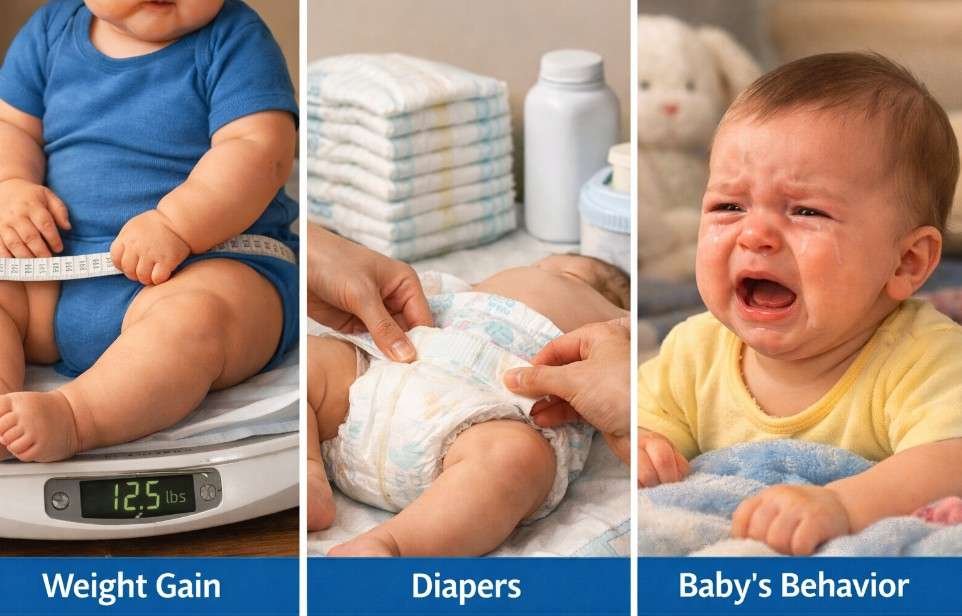
- Weight Gain: The most reliable sign that your baby is getting enough food is consistent weight gain. On average, newborns gain about 5–7 ounces per week during the first few weeks.
- Diapers: A well-fed baby will typically have 6–8 wet diapers per day and at least a few bowel movements. If you’re seeing this, it’s a good indication your baby is feeding well.
- Baby’s Behavior: After a feeding, your baby should seem content. If your baby is satisfied and alert, you’ve likely given them the right amount. Watch for signs of fullness—like stopping sucking or turning away from the bottle or breast.
Feeding Amounts by Age
| Baby’s Age | Breastfeeding (Per Feed) | Formula (Per Feed) | Frequency |
| Day 1 | ~1 tsp (5 mL) | 0.5 – 1 oz | Every 1–3 hours |
| Days 2–3 | 0.5 – 1 oz | 1 – 2 oz | Every 2–3 hours |
| 1 Week | 1.5 – 2 oz | 2 – 3 oz | Every 2–3 hours |
| 2–4 Weeks | 2 – 4 oz | 3 – 4 oz | Every 3–4 hours |
How to Feed Your Newborn Baby: A Step-by-Step Guide
Feeding your newborn can seem intimidating, but once you get the hang of it, it will become second nature. Here’s a step-by-step guide to help you confidently feed your little one, whether you’re breastfeeding or formula feeding:

Step 1: Positioning for Breastfeeding
Find a comfortable spot to sit, with good back support. Hold your baby close to your chest, supporting their neck and back. Make sure your baby’s mouth is properly latched onto your breast to prevent pain and to help with milk transfer.
For formula feeding, make sure the bottle is prepared with the right amount of formula. Hold the bottle at a 45-degree angle to avoid air bubbles.
Step 2: Begin Feeding
Allow your baby to latch on and begin nursing. If bottle-feeding, make sure the milk fills the nipple and that your baby isn’t sucking air. You may want to take breaks during breastfeeding to burp your baby, which will help with digestion.
Step 3: Monitor Feeding Times
Each breastfeeding session may last anywhere from 10 to 20 minutes per breast. If you’re formula feeding, they may finish faster, usually within 15–30 minutes. Pay attention to your baby’s cues—if they seem content and stop sucking, they are likely done.
Step 4: Burp After Feeding
Once your baby has eaten, it’s time to burp them. Hold your baby upright over your shoulder and gently pat or rub their back to release any air they may have swallowed during the feed.
Step 5: Watch for Cues
Babies are excellent at telling you when they’re hungry and when they’ve had enough. Keep an eye on your baby’s cues—if they show signs of hunger (like rooting or sucking on their hands), offer another feed. If they seem satisfied, they’re probably done.
Frequently Asked Questions (FAQs)
1. How often should I feed my newborn baby?
In the first few weeks, aim to feed your newborn every 2–3 hours, day and night. Newborns have tiny stomachs and need frequent feedings. Expect 8–12 feedings per day during this period. As your baby grows, they may begin to go longer between feedings.
2. Can I overfeed my newborn baby?
It’s unlikely that you’ll overfeed your newborn if you follow their hunger cues. Babies typically eat based on their appetite, and they will stop when they’re full. If your baby shows signs of fullness, such as turning away from the breast or bottle or falling asleep, stop the feed.
3. How much formula should a newborn baby drink?
In the first week, a newborn should drink about 1 to 2 ounces of formula per feed. By the second week, they may consume about 2 to 3 ounces. The amount will increase as they grow. Remember that every baby is different, so adjust based on their hunger cues and doctor’s advice.
4. How do I know if my newborn is eating enough?
You can tell if your baby is getting enough food by monitoring their weight gain (about 5–7 ounces per week), the number of wet diapers (6–8 per day), and their behavior after feeding. A content, happy baby who is gaining weight and wetting enough diapers is a good sign they’re feeding well.
Trust Your Instincts, Parent!
Feeding your newborn is a journey, and though it might feel like a guessing game in the beginning, you’re doing great! Trust your instincts and your baby’s cues as you navigate this new experience. Every baby is unique, and what works for one may not work for another. You’ve got this!
As a final tip, don’t be afraid to reach out to your pediatrician with any concerns. They’re there to help guide you, and sometimes a quick check-in can bring you the peace of mind you need.