

Long hours on screens became part of my daily routine, and that’s when I started wondering what do blue light glasses do and whether they actually make a difference. With so many claims about better sleep and reduced eye strain, it felt important to separate facts from marketing and understand how they really work in everyday life.
What Do Blue Light Glasses Do And How They Work
Let’s start with how these glasses function before diving into benefits.
Blue light glasses are designed to filter or block high-energy blue light emitted from digital screens like smartphones, laptops, and tablets. They use specialized lens coatings or pigments that absorb or reflect certain blue light wavelengths before they reach your eyes.
This filtering does not eliminate blue light completely. Instead, it reduces exposure, which may help your eyes feel more comfortable during extended screen use. The effectiveness depends on the type of lens and how much blue light it blocks.
How Blue Light Interacts With Your Eyes
Blue light is naturally present in sunlight and plays a role in regulating your body clock. However, artificial exposure from screens is constant and often occurs at close distances, which changes how your eyes respond.
When you focus on screens for long periods, your eyes work harder. Reduced blinking and constant focusing can lead to dryness and fatigue, which is often mistaken as a direct effect of blue light.
How Lens Technology Filters Light
The lenses in blue light glasses include coatings that selectively filter specific wavelengths. Some lenses reflect blue light away, while others absorb it within the material itself.
Clear lenses provide mild filtering, while tinted lenses offer stronger protection. The level of filtering determines how noticeable the effect will be during use.
Blue Light Glasses For Sleep And Daily Use
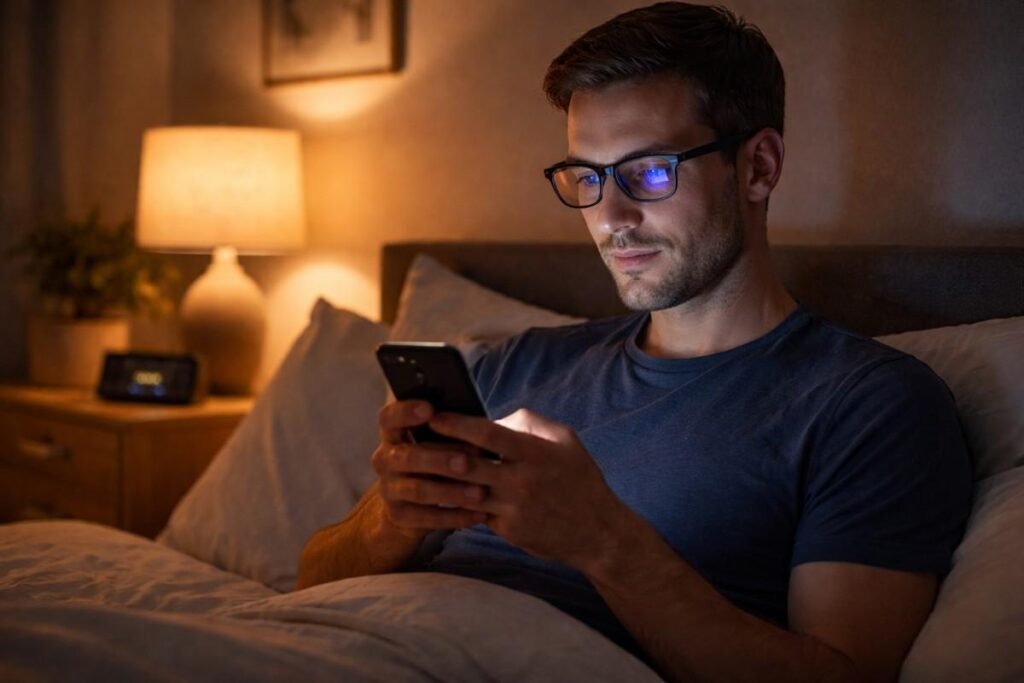
One of the most widely discussed benefits is improved sleep quality. Blue light exposure in the evening can suppress melatonin, the hormone that regulates your sleep cycle. By reducing this exposure, the glasses can support a more natural sleep pattern.
In daily use, they may also improve comfort during long screen sessions. While results vary, many people report reduced glare and a more relaxed viewing experience when using them consistently.
Do They Improve Sleep Quality?
Using blue light glasses at night can help your body transition into sleep mode more easily. This is especially helpful if your routine involves late-night screen use.
The key is timing. Wearing them in the evening rather than throughout the day delivers better results because that is when melatonin suppression matters most.
Do They Reduce Digital Eye Strain?
Many users feel relief from symptoms like tired eyes and dryness. However, research suggests that digital eye strain is mainly caused by prolonged screen use rather than blue light alone.
Simple habits like taking breaks and blinking more often often have a stronger impact than glasses alone. This is an important point that many blogs overlook.

Do They Enhance Visual Comfort?
The anti-glare properties of many lenses can make screens easier to look at. Reduced reflections and slightly improved contrast can make a noticeable difference during long work sessions.
This added comfort is often why people continue using them even if the scientific evidence is mixed.
Types Of Blue Light Lenses & Their Differences
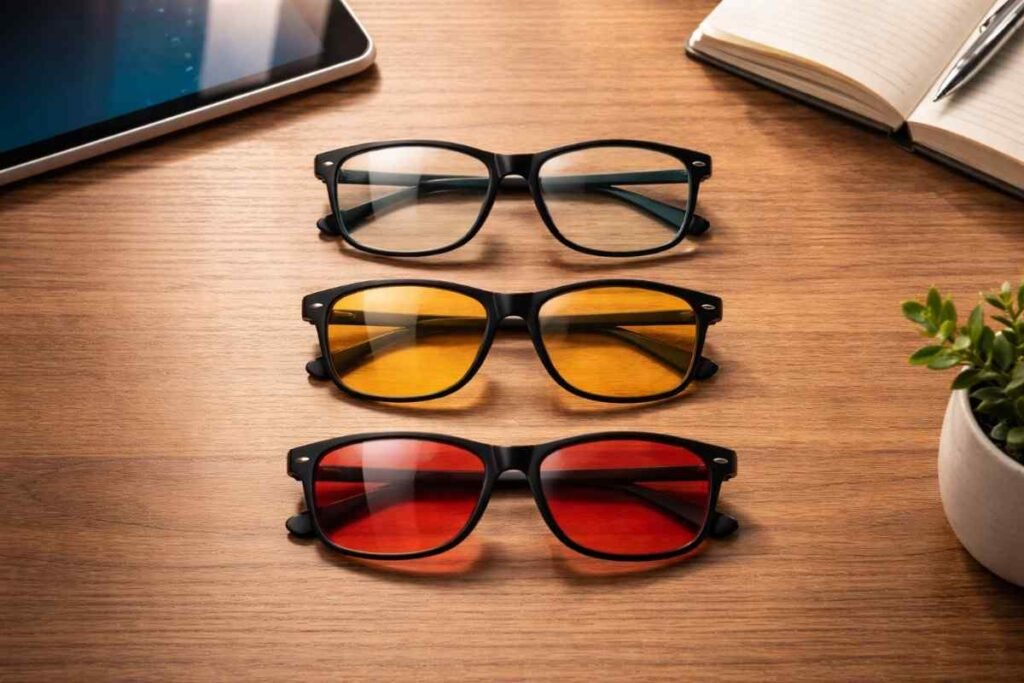
Clear lenses are designed for everyday use and offer mild filtering while maintaining natural color accuracy. These are popular for people who work during the day and want subtle support. Amber or yellow lenses block a higher percentage of blue light and are often used by heavy screen users. They slightly alter color perception but provide stronger filtering.
Clear Lenses For Everyday Use
These lenses are ideal for office work and general screen exposure. They reduce some blue light without affecting how colors appear on your screen. They are a good starting point if you want comfort without noticeable visual changes.
Amber Lenses For Stronger Filtering
Amber lenses typically block 50 percent or more of blue light. They are useful for extended screen time or for people who are more sensitive to light. The warmer tint may take time to adjust to, but it can improve comfort during long sessions.
Red Or Orange Lenses For Night Use
These lenses are designed for evening use and can block nearly all blue light. They are often used to support melatonin production before bedtime. They are not ideal for daytime tasks due to heavy color distortion but work well for nighttime routines.
Scientific Perspective On Blue Light Glasses
Medical organizations like the American Academy of Ophthalmology do not currently recommend blue light glasses specifically for computer use. Their position is that digital eye strain is mainly caused by screen habits rather than blue light exposure.
This does not mean the glasses are useless. It simply means they should be viewed as one part of a broader strategy rather than a complete solution. Understanding expert opinions helps set realistic expectations.
What Research Says About Effectiveness
Studies show mixed results when it comes to reducing eye strain. Some users report comfort improvements, but large-scale reviews do not show strong evidence of significant benefits. However, there is more consistent support for their role in improving sleep when used in the evening.
Why Screen Habits Matter More
Factors like posture, screen brightness, and break frequency play a bigger role in eye comfort. Poor habits can cause strain even if you use blue light glasses. This is why combining glasses with better habits creates better results.
The 20-20-20 Rule Explained
Experts often recommend looking 20 feet away for 20 seconds every 20 minutes. This simple habit helps relax your eye muscles and reduce fatigue. In many cases, this approach is more effective than relying only on glasses.
Frequently Asked Questions
1. What Do Blue Light Glasses Do For Your Eyes?
They filter blue light, reduce glare, and may improve comfort during screen use, but they do not eliminate eye strain completely.
2. Do Blue Light Glasses Really Work?
They can help with sleep and visual comfort, but they are not a complete solution for eye health or strain.
3. Should You Wear Them All Day?
Daytime use is optional. Evening use is more effective for supporting sleep.
4. Are They Worth Buying?
They are useful for specific situations like night screen use, but habits matter more than the product itself.
Should You Use Them?
Understanding what do blue light glasses do helped me focus less on quick fixes and more on building better habits. They can improve comfort and support sleep when used correctly, especially at night. However, they are not a replacement for healthy screen use. Combining them with smart routines creates a more effective and sustainable approach to eye care.