As parents, our primary goal is always to ensure the safety and health of our children and pets. However, many of us may not realize that the very place we think is a safe haven — our home — could be harboring harmful toxins that negatively affect their health. Everyday products, cleaners, furniture, and even the air we breathe can expose our loved ones to chemicals linked to allergies, asthma, hormonal disruption, and long-term health issues.
In this blog, I’ll walk you through practical steps and thoughtful decisions to transform your home into a non-toxic sanctuary, where your kids can crawl, pets can lounge, and you can all breathe easy. It’s about making conscious choices that create a healthier environment for your family.
What Does a “Non-Toxic Home” Really Mean?
A non-toxic home minimizes exposure to harmful chemicals that could jeopardize your loved ones’ health. Many household products, from cleaners to furniture, contain harmful substances like volatile organic compounds (VOCs), flame retardants, and phthalates. These chemicals may lead to respiratory issues, allergies, developmental problems, and hormone disruption.
Transitioning to a non-toxic home doesn’t mean making drastic changes overnight. It’s about making gradual improvements and choosing products and practices that safeguard your family’s well-being.
Why This Matters for Kids and Pets
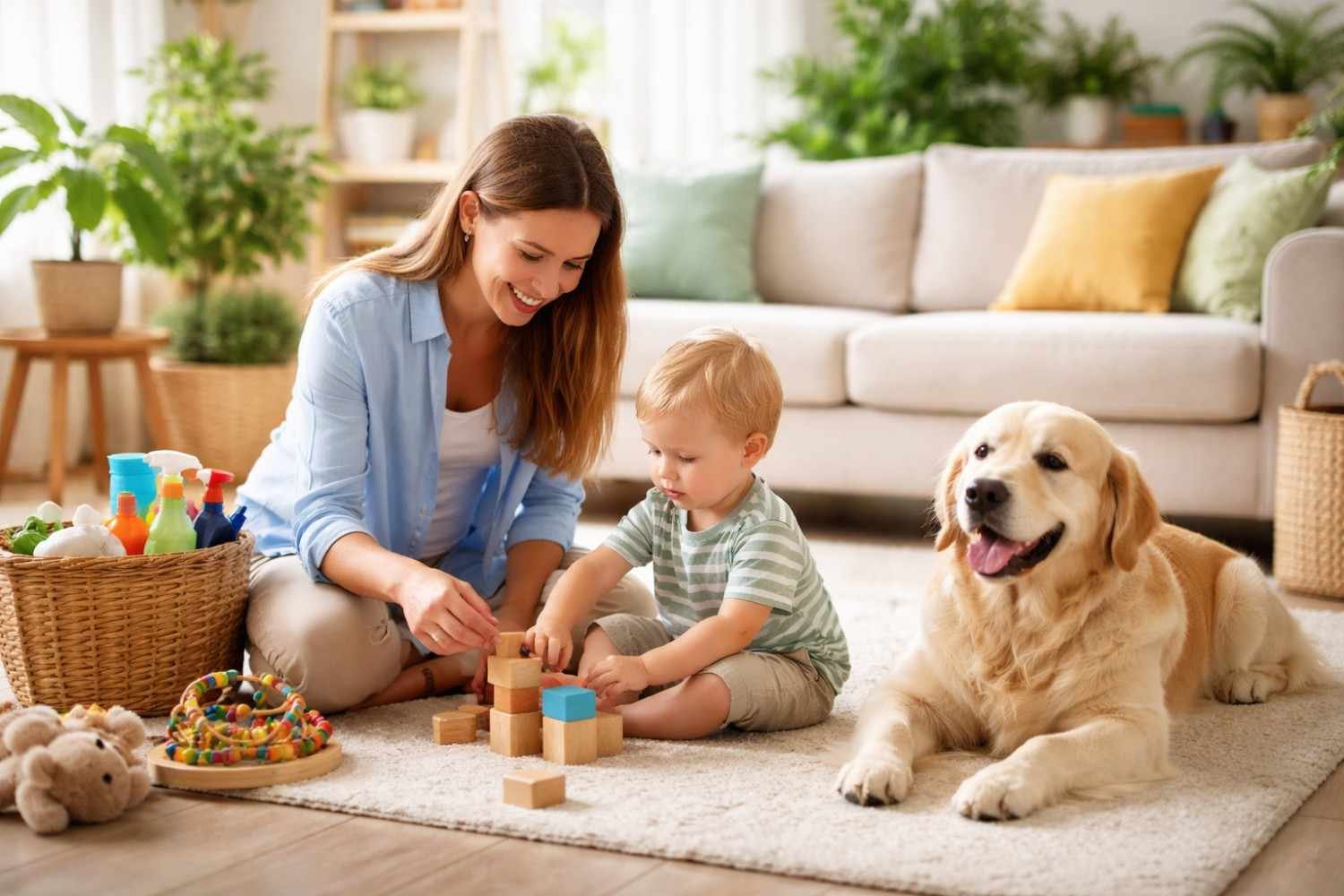
Our children and pets are especially vulnerable to toxins. Babies and young kids are closer to the ground and tend to put objects in their mouths, which means they come in direct contact with floor surfaces, toys, and furniture that might be coated with harmful chemicals. Kids also breathe more air per body weight than adults, which increases their exposure to airborne toxins in your home.
Similarly, pets, who spend a lot of time on the floor, are often exposed to toxins from chemicals used in cleaning, furniture, or even food packaging. Some substances that are safe for us may cause severe harm to pets, especially small animals.
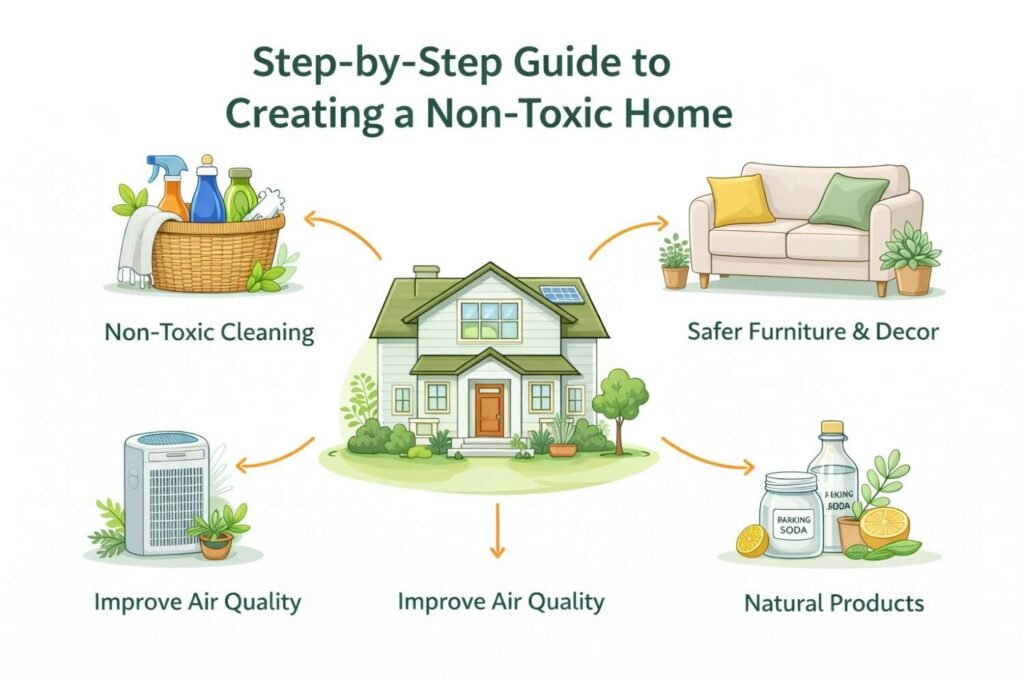
Step-by-Step Guide to Creating a Non-Toxic Home
1. Start with Non-Toxic Cleaning Alternatives
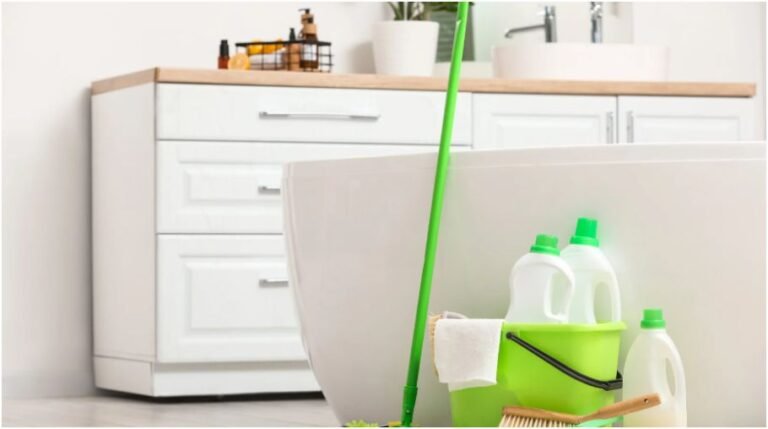
Most conventional cleaning products contain harmful chemicals like VOCs, bleach, ammonia, and phthalates. These substances are not only toxic to your family’s health, but they can also harm the environment.
How to make your home non-toxic:
- Switch to plant-based or biodegradable cleaners: Look for products that are free from harsh chemicals. These cleaners are safe for both children and pets and are usually just as effective as their conventional counterparts.
- DIY cleaning products: Simple ingredients like vinegar, baking soda, and lemon juice can handle most cleaning tasks without any risk.
- Green-certified products: Choose products that are labeled with certifications such as the EPA’s Safer Choice or Green Seal. These labels indicate that the product has met rigorous environmental and health safety standards.
2. Improve Indoor Air Quality
Indoor air quality can be 5 to 10 times more polluted than outdoor air due to dust, pet dander, cleaning chemicals, and residues from furniture. Poor air quality can exacerbate respiratory problems, especially in children and pets.
Steps to improve air quality:
- Use air purifiers: HEPA filters are excellent at removing airborne pollutants like dust, allergens, and pet dander.
- Ventilate regularly: Open windows when the weather allows to improve airflow and allow fresh air to circulate.
- Indoor plants: Certain houseplants can help improve air quality by absorbing harmful toxins. Some plants that are particularly good for air purification include spider plants, peace lilies, and English ivy.
- Replace HVAC filters regularly: A clean filter helps remove dust and other particles from circulating through your home’s air.
3. Choose Non-Toxic Furniture and Decor

Many furniture items, especially older ones, can off-gas harmful chemicals like formaldehyde and flame retardants. These chemicals are linked to various health issues, including respiratory problems and hormonal imbalances.
What to look for:
- Furniture with low or no VOC finishes: When buying new furniture, choose items that have been finished with low or no VOC paints, stains, or varnishes. These finishes emit fewer harmful chemicals into the air.
- Look for flame-retardant-free furniture: Some furniture, particularly mattresses and upholstered items, contain harmful flame retardants. Look for alternatives that are free from these chemicals.
- Natural materials: Opt for furniture made from natural materials like solid wood, cotton, or wool. Avoid synthetic materials like particle board or foam, which can contain harmful chemicals.
4. Make Healthy Choices in the Kitchen
Your kitchen should be a safe, clean space for preparing meals, but many kitchen items can release harmful chemicals when heated or used with food. Non-stick cookware, plastic containers, and certain food storage materials are common offenders.
Steps to create a safe kitchen:
- Choose non-toxic cookware: Avoid non-stick cookware that contains perfluorooctanoic acid (PFOA) and perfluorooctane sulfonate (PFOS). Instead, choose cast iron, stainless steel, or ceramic cookware.
- Replace plastic containers: Opt for glass or stainless steel containers for food storage. Plastic containers can leach harmful chemicals like BPA and phthalates into your food.
- Use stainless steel or bamboo utensils: Avoid plastic utensils that can leach chemicals when heated or scratched.
5. Safeguard Your Pets
Many of the same chemicals that are harmful to humans can also be toxic to pets. Pets often lick surfaces or eat things they shouldn’t, making them particularly susceptible to chemical exposure.
Pet-safe practices to follow:
- Use pet-safe cleaning products: Always choose cleaning products that are specifically labeled as safe for pets. Many traditional cleaning products, like bleach or ammonia, can be toxic to pets if ingested or inhaled.
- Avoid toxic plants: Certain plants are highly toxic to pets. Some common toxic plants include lilies, azaleas, and poinsettias. Make sure to check any plants you bring into your home to ensure they’re pet-safe.
- Pet-friendly pesticides: If you need to use pesticides, choose natural alternatives that are non-toxic to pets. Avoid sprays that contain harsh chemicals.
6. Choose Safe Pest Control Methods
Pests like ants, rodents, and cockroaches can be a nuisance, but many traditional pest control methods can expose your family and pets to harmful chemicals.
Alternatives to consider:
- Use non-toxic traps: Opt for traps instead of sprays. You can also use natural deterrents like peppermint oil or diatomaceous earth.
- Hire an eco-friendly pest control service: If professional help is needed, seek out pest control services that use eco-friendly and non-toxic methods.
7. Upgrade to Low-VOC Paints and Building Materials

When painting or renovating, the type of paint and materials you choose matters. Many conventional paints and building materials contain high levels of VOCs, which can linger in your home for days or even weeks.
What to choose:
- Low-VOC paints: Look for paints that are labeled as low or no VOC. These paints emit fewer harmful chemicals into the air, making them safer for everyone in your home.
- Non-toxic building materials: When renovating or redecorating, choose materials that are free from harmful chemicals. Some options include natural wood, cork, bamboo, and reclaimed materials.
8. Daily Habits to Maintain a Non-Toxic Home
It’s the little things that add up over time. Here are a few daily habits that can help maintain a non-toxic home:
| Habit | Benefit |
| Clean with vinegar and baking soda | Reduces chemical exposure and keeps your home fresh |
| Wash hands regularly | Removes chemicals from everyday surfaces |
| Use a doormat | Reduces dirt and toxins from entering the home |
| Go fragrance-free | Avoids exposure to synthetic scents that can irritate |
Frequently Asked Questions (FAQs)
1. What are VOCs, and why should I care?
VOCs (Volatile Organic Compounds) are chemicals found in many household products like paints, cleaning supplies, and furniture finishes. They can irritate your respiratory system and have long-term health effects. Keeping your home free from VOCs ensures cleaner air and better health.
2. Are “natural” air fresheners safe?
Not always. Many “natural” air fresheners still contain VOCs or other chemicals that can cause health problems. Opt for natural solutions like essential oils in a diffuser or fresh flowers to keep your home smelling fresh.
3. How can I make my home safer for my pets?
Use pet-safe cleaning products, keep toxic plants out of reach, and ensure any chemicals or cleaners are fully rinsed away from surfaces. Pet-safe alternatives should always be your first choice.
4. Is it difficult to make a home non-toxic?
Not at all! Start by replacing the most harmful items — like harsh cleaners and synthetic fragrances — with non-toxic alternatives. You don’t have to do it all at once; make gradual changes over time.
Conclusion
Creating a non-toxic home is a journey that benefits everyone in the family — from your children to your pets to yourself. It’s about making smarter choices that contribute to a healthier environment for years to come. Every little adjustment counts, whether it’s making the move to plant-based cleaning supplies or selecting safer furnishings. Making thoughtful choices now will contribute to your loved ones’ future health.
Let’s make our homes places of comfort, joy, and peace — free from harmful chemicals.