

We’ve all been there—standing in front of the mirror, running our fingers through hair that feels like straw and wondering, how do I repair damaged hair? Maybe it’s from too many heat styling sessions, over-bleaching, or just life’s daily wear and tear.
I once thought my hair would never recover from a DIY color mishap that left it looking like a dried-up sponge. But trust me, with the right approach, your hair can go from “uh-oh” to “wow!” Let’s dive into everything you need to know about bringing life back to your locks.
Together, we’ll tackle the causes of hair damage, easy solutions, and step-by-step strategies for restoring your hair’s health. So, whether your hair is a victim of heat, chemicals, or just over-styling, you’ll find the perfect routine to nurse it back to its best self.
What Causes Hair Damage and How Do You Identify It?
Understanding the root causes of hair damage is crucial if you’re wondering how to repair damaged hair. Damaged hair doesn’t just happen overnight, and it usually has a few telltale signs. From dry ends to breakage, your hair gives you clues that it’s time for a recovery plan.
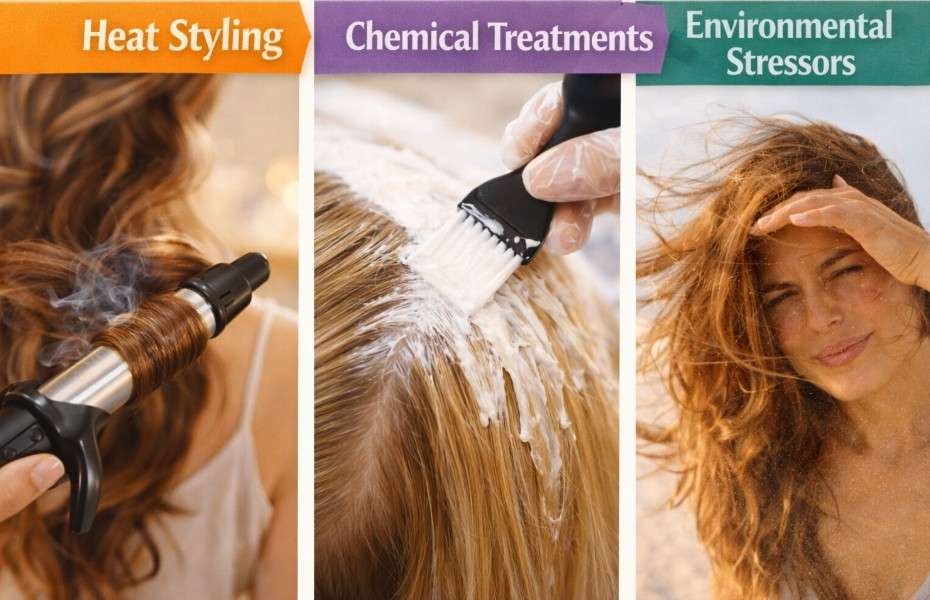
Heat Styling
Excessive use of flat irons, curling irons, and blow dryers can cause your hair’s cuticle (the outer layer) to break down, making it dry and weak. Over time, this leads to split ends and brittle strands.
Chemical Treatments
Bleaching and coloring can be the ultimate hair makeover, but these processes also strip hair of moisture and proteins, making it fragile and prone to breakage. Over-processing, like bleaching too frequently, accelerates the damage.
Environmental Stressors
Sun exposure, chlorine, and even pollutants can dehydrate your hair, robbing it of its natural oils and leaving it looking lackluster.
How Do I Repair Damaged Hair? Steps to Take Immediately
Ready to treat your hair like royalty? Here’s your step-by-step guide to repairing those damaged strands and bringing them back to life.
Step 1: Focus on Bond-Building Treatments
Your hair’s internal structure is made up of protein bonds that can break down due to heat or chemicals. Rebuilding these bonds should be your priority.
Bond-Repairing Products
Look for products like Olaplex No. 5 Bond Maintenance Conditioner, which helps reconnect those broken bonds, reducing frizz and split ends. These products are key to improving hair strength and resilience.
Molecular Repair Services
If you’re up for a professional touch, consider visiting a salon for treatments like the K18 Hair Repair Treatment. This service restores your hair’s strength in just a few minutes, making a noticeable difference.
Step 2: Deep Hydration with Hair Masks
Damaged hair often lacks moisture, and deep conditioning is a simple yet effective way to restore it. You can’t repair damage without addressing the dryness that often accompanies it.
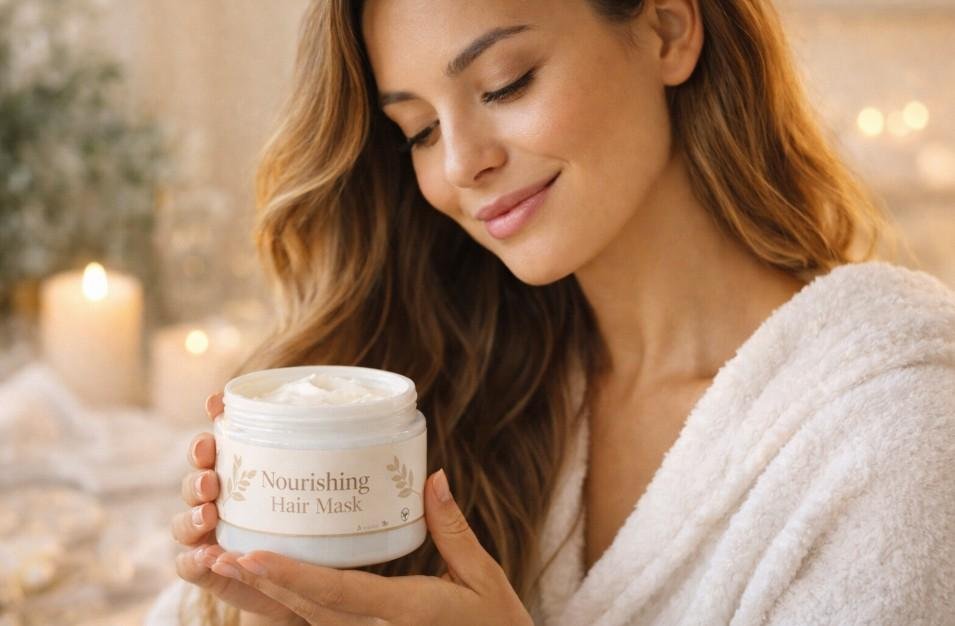
Weekly Hydrating Masks
Use a nourishing mask like the Kérastase Première Anti-Breakage Repairing Mask once or twice a week. These products fill in gaps in the hair fibers, providing hydration and enhancing resilience.
Step 3: Reduce Heat Styling and Chemical Exposure
Once you start treating your hair with bond-building treatments and hydration masks, it’s essential to keep it protected from further damage.
Heat Protectant
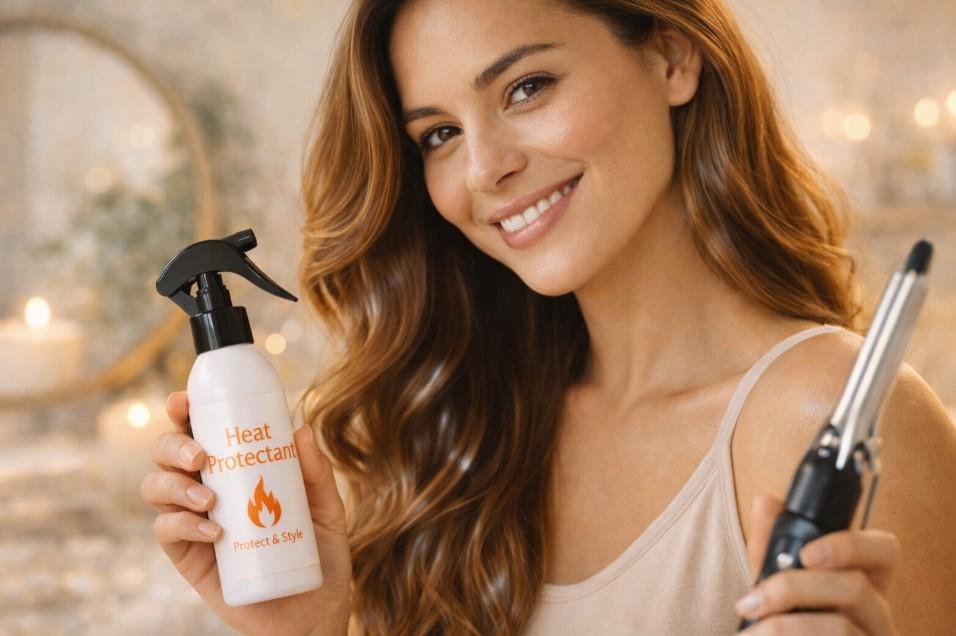
Before styling, always apply a heat protectant like Aveda Damage Remedy Daily Hair Repair. This creates a barrier between your hair and high temperatures, reducing the risk of future damage.
Give Your Hair a Break
Minimize heat styling and chemical treatments. Instead, embrace natural hairstyles or low-heat options like air-drying or using a heatless curl method. Your hair will thank you!
How Long Does It Take to Repair Damaged Hair?
The time it takes to repair damaged hair can vary depending on how severe the damage is. Minor issues may show improvement in as little as one to two weeks, while more extensive damage (like from bleach or over-styling) can take several months to repair.
The key to success is consistency. Stick to your haircare routine, stay hydrated, and trim your ends regularly. With patience, your hair will gradually regain its strength and shine.
Frequently Asked Questions (FAQs)
1. How can I tell if my hair is truly damaged?
Damaged hair will often feel dry, brittle, and rough to the touch. You might notice split ends or breakage, particularly at the tips of your strands. In severe cases, hair can lose its natural shine and appear dull. A simple way to test is by gently pulling a strand of hair—if it snaps easily, it’s a sign of damage.
2. Can damaged hair ever return to normal?
While you can’t “revive” truly damaged hair, you can significantly improve its appearance and strength. Treatments like bond-building conditioners, deep hydration, and gentle handling can restore moisture and reduce breakage. So, while you can’t undo damage entirely, you can make your hair look and feel healthier again.
3. What is the best product for repairing split ends?
For split ends, look for a product like Kenra Triple Repair Split End Mending Serum, which seals up to 90% of split ends in a single use. To prevent further splits, regular trims every 6-8 weeks are essential.
How to Get Healthy Hair Back in No Time
Repairing damaged hair doesn’t happen overnight, but with the right tools and products, your hair can absolutely bounce back to life. Whether it’s through bond-building treatments, deep conditioning masks, or reducing heat styling, you’re now equipped with the best steps to repair that damaged hair and give it the love it deserves.
Remember, the key to great hair is consistent care and patience. Stick to your routine, be gentle with your strands, and keep your hair hydrated, and you’ll be on your way to healthier, stronger locks in no time. And hey, if all else fails—just rock that “I’m recovering from hair damage” vibe like a pro. You’ve got this!